
































• About
  • Advertise
  • Write For Us
  • Privacy Policy
  • Contact Us
Subscribe
Smart Investor Malaysia
Advertisement
  • Start Here
    • All
    • Guides
    • How-Tos
    • Analysis

    What You Need To Know About The Insurance Industry In Malaysia

    PropertyGuru: Malaysian Residential Property Market Continues To Face Challenges As Supply And Demand Declines

    Fed Turns The Tide In War On Inflation, But It’s Too Early To Declare Victory

    MRTT VS MRTA, What’s The Difference?

    The Smart Investor’s Guide to Insurance

    Highlights: Malaysia’s Revised Budget 2023

    4 Reasons Why You Need To Invest In ETF

    SPY vs SPUS: A 2023 Comparison of S&P 500 ETFs

    7 Tips For First-Time Home Buyers

    • Guides
    • How-Tos
    • Analysis
  • Investments
    • All
    • Asset Management
    • Stocks
    • Islamic Finance
    • Alternative Investments

    Investment Strategies for a Rosy Portfolio

    Evaluating Bitcoin as a Store of Value in 2024

    Uncovering Asset Gems: 2024 Morningstar Awards for Investing Excellence – Malaysia

    Invest Johor’s Vision Unveiled

    The Rise of The Ibu Boss

    Invest Johor’s Vision Unveiled

    Malaysia’s dance with FAANG Giants

    ICMR Research Series: Taking a Dual and Systematic Approach to Address Investor Vulnerability in Malaysia

    AIIMAN menjalin pakatan strategik dengan Bank Islam sebagai Rakan Pengedar Untuk Luaskan Capaian Kepada Produk Kekayaan Syariah

    • Asset Management
    • Stocks
    • Islamic Finance
    • Alternative Investments
  • Personal Finance
    • All
    • Cash Management
    • Grow Your Wealth
    • Protect Your Wealth
    • Distribute Your Wealth
    • Behavioural Finance

    Steering The Malaysia’s ESG Landscape

    Securing Your Legacy

    Personal Finance In The Cyber Age

    Protecting Your Welfare and Financial Interests in The Face of Mental Incapacity

    The Far-Reaching Impact of Inflation

    Trust In Transition: Ensuring Legacy Security Amidst Blended Family Dynamics

    ICMR Research Series: Taking a Dual and Systematic Approach to Address Investor Vulnerability in Malaysia

    Property Tussle: Being Left Homeless After Sister’s Death

    Employment Opportunity Fraud Syndicate: Lidt Cooperation Advertising Sdn Bhd Or Lidl Cooperation Advertising Sdn Bhd

    • Cash Management
    • Grow Your Wealth
    • Protect Your Wealth
    • Distribute Your Wealth
    • Behavioural Finance
  • Enterprise
    • All
    • Startups
    • Entrepreneurs
    • SMEs
    • Leadership
    • Business Planning
    • Fintech

    Invest Johor’s Vision Unveiled

    Ravi Vamathevan: Connecting Migrants, Changing Lives – The Valyou Sdn Bhd Story

    Exploring the Ethics of Artificial Intelligence and Machine Learning

    2023 Investor Day of icapital.biz Berhad (ICAP, 5108)

    From left Eizzar Supiar, AVP - Evaluation, Cradle_ Adlin Yusman, Co-Founder of BeMalas_ Suthenesh Sugumaran, Co-Founder of BeMalas_ and Joyce Wee, Former Executive Director of Etalage

    Cradle Circle: Bridging Visionary Startups and Investors in Second Series Event

    Gorgeous Geeks Marks 15 Years of Empowering Women in Technology

    MDDA Celebrates 30 Years of Industry Excellence

    DNA Mapping, A Revolutionary Medical Breakthrough

    Thomson Ushers In New Treatment for Spinal Muscular Atrophy

    • Startups
    • Entrepreneurs
    • SMEs
    • Leadership
    • Business Planning
    • Fintech
  • Property
    • All
    • First Time Home Buyers
    • Feature

    From Skyscrapers to Serenity: Malaysia’s Housing Harmony

    How Is The Malaysian Property Industry Doing Post-Covid?

    SIBS Secures Multi-Billion Ringgit Modular Apartment Building Project To NEOM, Saudi Arabia

    VIPs pour gold paint into the KL Wellness City logo, symbolizing the injection of life to the crown jewel of Malaysia’s medical tourism hub - KL Wellness City

    Official Launch Of KL Wellness City

    Pavilion REIT Concludes Acquisition Of Pavilion Bukit Jalil, Reinforcing Retail Portfolio

    PropertyGuru: Malaysian Residential Property Market Continues To Face Challenges As Supply And Demand Declines

    MRTT VS MRTA, What’s The Difference?

    6 Online Courses to Learn about ESG And ESG Investing

    7 Tips For First-Time Home Buyers

    • First Time Home Buyers
    • Central
    • Northern
    • Southern
    • Sabah & Sarawak
    • Regional / Global
    • Feature
  • ESG
  • News & Events
  • Bahasa Melayu
No Result
View All Result
  • Start Here
    • All
    • Guides
    • How-Tos
    • Analysis

    What You Need To Know About The Insurance Industry In Malaysia

    PropertyGuru: Malaysian Residential Property Market Continues To Face Challenges As Supply And Demand Declines

    Fed Turns The Tide In War On Inflation, But It’s Too Early To Declare Victory

    MRTT VS MRTA, What’s The Difference?

    The Smart Investor’s Guide to Insurance

    Highlights: Malaysia’s Revised Budget 2023

    4 Reasons Why You Need To Invest In ETF

    SPY vs SPUS: A 2023 Comparison of S&P 500 ETFs

    7 Tips For First-Time Home Buyers

    • Guides
    • How-Tos
    • Analysis
  • Investments
    • All
    • Asset Management
    • Stocks
    • Islamic Finance
    • Alternative Investments

    Investment Strategies for a Rosy Portfolio

    Evaluating Bitcoin as a Store of Value in 2024

    Uncovering Asset Gems: 2024 Morningstar Awards for Investing Excellence – Malaysia

    Invest Johor’s Vision Unveiled

    The Rise of The Ibu Boss

    Invest Johor’s Vision Unveiled

    Malaysia’s dance with FAANG Giants

    ICMR Research Series: Taking a Dual and Systematic Approach to Address Investor Vulnerability in Malaysia

    AIIMAN menjalin pakatan strategik dengan Bank Islam sebagai Rakan Pengedar Untuk Luaskan Capaian Kepada Produk Kekayaan Syariah

    • Asset Management
    • Stocks
    • Islamic Finance
    • Alternative Investments
  • Personal Finance
    • All
    • Cash Management
    • Grow Your Wealth
    • Protect Your Wealth
    • Distribute Your Wealth
    • Behavioural Finance

    Steering The Malaysia’s ESG Landscape

    Securing Your Legacy

    Personal Finance In The Cyber Age

    Protecting Your Welfare and Financial Interests in The Face of Mental Incapacity

    The Far-Reaching Impact of Inflation

    Trust In Transition: Ensuring Legacy Security Amidst Blended Family Dynamics

    ICMR Research Series: Taking a Dual and Systematic Approach to Address Investor Vulnerability in Malaysia

    Property Tussle: Being Left Homeless After Sister’s Death

    Employment Opportunity Fraud Syndicate: Lidt Cooperation Advertising Sdn Bhd Or Lidl Cooperation Advertising Sdn Bhd

    • Cash Management
    • Grow Your Wealth
    • Protect Your Wealth
    • Distribute Your Wealth
    • Behavioural Finance
  • Enterprise
    • All
    • Startups
    • Entrepreneurs
    • SMEs
    • Leadership
    • Business Planning
    • Fintech

    Invest Johor’s Vision Unveiled

    Ravi Vamathevan: Connecting Migrants, Changing Lives – The Valyou Sdn Bhd Story

    Exploring the Ethics of Artificial Intelligence and Machine Learning

    2023 Investor Day of icapital.biz Berhad (ICAP, 5108)

    From left Eizzar Supiar, AVP - Evaluation, Cradle_ Adlin Yusman, Co-Founder of BeMalas_ Suthenesh Sugumaran, Co-Founder of BeMalas_ and Joyce Wee, Former Executive Director of Etalage

    Cradle Circle: Bridging Visionary Startups and Investors in Second Series Event

    Gorgeous Geeks Marks 15 Years of Empowering Women in Technology

    MDDA Celebrates 30 Years of Industry Excellence

    DNA Mapping, A Revolutionary Medical Breakthrough

    Thomson Ushers In New Treatment for Spinal Muscular Atrophy

    • Startups
    • Entrepreneurs
    • SMEs
    • Leadership
    • Business Planning
    • Fintech
  • Property
    • All
    • First Time Home Buyers
    • Feature

    From Skyscrapers to Serenity: Malaysia’s Housing Harmony

    How Is The Malaysian Property Industry Doing Post-Covid?

    SIBS Secures Multi-Billion Ringgit Modular Apartment Building Project To NEOM, Saudi Arabia

    VIPs pour gold paint into the KL Wellness City logo, symbolizing the injection of life to the crown jewel of Malaysia’s medical tourism hub - KL Wellness City

    Official Launch Of KL Wellness City

    Pavilion REIT Concludes Acquisition Of Pavilion Bukit Jalil, Reinforcing Retail Portfolio

    PropertyGuru: Malaysian Residential Property Market Continues To Face Challenges As Supply And Demand Declines

    MRTT VS MRTA, What’s The Difference?

    6 Online Courses to Learn about ESG And ESG Investing

    7 Tips For First-Time Home Buyers

    • First Time Home Buyers
    • Central
    • Northern
    • Southern
    • Sabah & Sarawak
    • Regional / Global
    • Feature
  • ESG
  • News & Events
  • Bahasa Melayu
No Result
View All Result
Smart Investor Malaysia
No Result
View All Result
Advertise with Smart Investor Advertise with Smart Investor Advertise with Smart Investor
Home Start Here Analysis

Analysis: The World after the Flood of Fiscal Stimulus

The flood of fiscal stimulus in response to the COVID-19 pandemic will have long-term repercussions.  

6 years ago
0
70
SHARES
138
VIEWS
Share on FacebookShare on Twitter

The global fiscal stimulus tap has been unleashed to fight the impact of the COVID-19 outbreak. We think the impact of this stimulus is binary and, if sustained, it could break the decade-long disinflationary cycle.

In contrast, if austerity measures are subsequently imposed, the era of low rates and low inflation will likely continue for the foreseeable future.

The combined scale of fiscal and monetary response has been massive – estimated to be around US$17 trillion at the time of writing. The quantum of stimulus provided this year is also significantly higher than the 2008 Global Financial Crisis (GFC).

This is not surprising since monetary policy has far less wiggle room now. Moreover, the pandemic is not due to bad economic decisions; there will be little backlash on governments supporting affected sectors (e.g. airlines, banks, small retailers etc.).

Although we saw countercyclical fiscal stimulus after the GFC, it was followed by significant austerity measures as governments were worried about the inflation implications of quantitative easing (QE). But inflation never returned.

The past decade has demonstrated the effect of loose monetary policies: negative interest rates, flatter yield curves, low inflation, accumulation of corporate debt, and narrowing credit spreads, among others. But we have little experience of knowing the combined effects of expansionary fiscal and monetary policies on economies and markets.
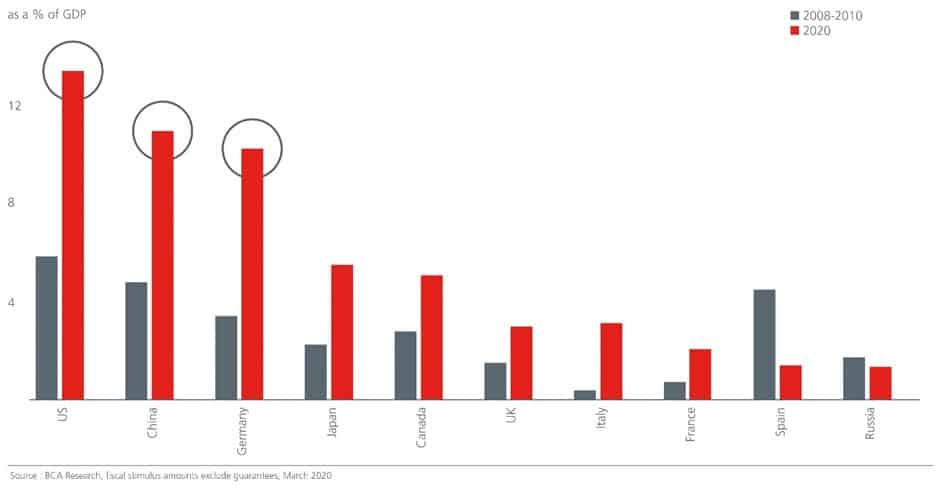
Fig 1: Global fiscal stimulus exceeds 2008

A Powerful Twin Policy-mix

A key difference between monetary and fiscal policy is that while monetary stimulus creates a large positive liquidity shock, it requires households and companies to be willing to take on debt and spend. On the other hand, fiscal spending adds directly to aggregate demand with no private sector debt build-up.

Large unemployment benefits and “helicopter” money are windfall gains to consumers and leave no debt behind. If the stimulus is directed towards public capital expenditure which ultimately increases economic growth and creates jobs, it would eventually crowd-in private spending and the multiplier effects would fuel higher growth.

Recent fiscal packages have focused on mitigating the initial impact of COVID-19. When the second-round of impact hits i.e. higher unemployment, corporate defaults and bankruptcies, more fiscal support will likely be announced.

Of course, if these stimulus packages prove to be one-off and governments hit the pause button on the deficits or actively seek to reduce it, the medium-term implications will likely mirror the conditions post GFC.

However, if countries see renewed waves of COVID-19 outbreaks, unemployment rates may stay elevated for a number of years. Against this backdrop, and with demographics not in favour for many developed and some emerging markets, countries that have limited binding constraints will probably continue to run large deficits.

The Fiscal Divergence

There will likely be divergences in the impact of fiscal stimulus on developed markets (DM) and emerging markets (EM). DM economies that have the benefit of low rates, low external debt, and low inflation can afford to keep monetary and fiscal policy easy, facilitating the cycle of higher demand, higher inflation and steeper curves.

But not all DM economies are in the sweet spot, particularly within Europe where monetary and fiscal policy do not work in tandem; certain countries may only be able to announce stimulus with constraints.

However, within EM economies, there are potentially two groups – one which does little fiscal stimulus to start with given their prudent approach, and one that continues with fiscal stimulus despite weak external balance sheets and therefore potentially face vulnerabilities in their foreign exchange and bond markets.

Looking at the EMBI universe, CEEMEA (Central & Eastern Europe, Middle East and Africa) countries stand out as being the most vulnerable as they have higher short-term external debts and are expected to run large fiscal deficits this year.

These economies indulging in fiscal extravagance may face sovereign rating downgrades, spike in bond yields, and steeper yield curves, and eventually be forced to undertake austerity measures. EM Asian economies appear as relatively stronger, with most having short-term external debts lower than 10% of GDP, with the exception of Malaysia.

While rising fiscal deficits are bringing debt sustainability questions to the fore, it is important to highlight that debt issuances are a problem mainly when interest rates are higher than nominal GDP growth. If interest rates remain low (as they are now) and fiscal spending leads to higher growth, then debt/GDP ratios might fall or at least remain steady.
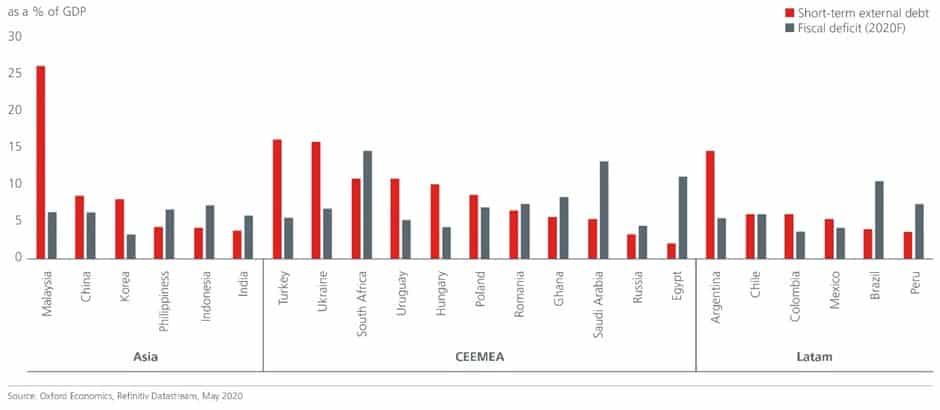
Fig 2: EM Asia appears to be better placed

Inflation or Disinflation?

Sustained fiscal deficit, combined with synchronised monetary stimulus may eventually break the decade-long disinflationary trend. Adding to this tailwind to inflation is the potential negative supply side shock driven by the end of globalisation and the reversal of supply chain efficiencies.

This scenario can be thought of as being akin to the post World War II period; after the negative demand shock and low inflation, the US economy saw a sharp rise in inflation led by stimulus, eventually forcing monetary policy to tighten substantially.

The process may be more gradual this time; it will take a while for the current economic slack to narrow. Besides, structural changes such as more remote working and less demand for business travel and commercial real estate will likely dampen inflationary pressures.

There are several market trends that have relied on subdued inflation expectations. First would be the impact on the yield curve. Post GFC, the yield curve steepened significantly as fiscal policy eased, but reversed as soon as austerity measures kicked in. Yields have fallen substantially since and yield curves flattened as inflation expectations have plummeted and monetary policy has remained easy.
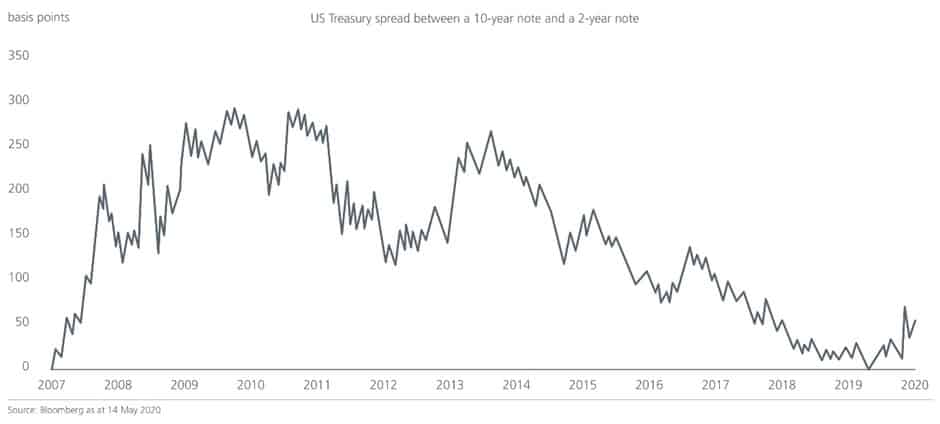
Fig 3: Yields have declined substantially since GFC

However, this trend may reverse – a spike in US treasury yields and a steeper yield curve is possible if the fiscal stimulus sustains. This in turn would have positive repercussions on rate-sensitive equities, particularly financials and other ‘value’ sectors.

Binary Outcomes

The risk of higher interest rates also implies that policymakers need to strike the right balance. Too swift a rise in yields could increase the debt burden and complicate refinancing issues for governments. Equally, rising inflation with no change in nominal rates could impede central bank credibility.

Central bankers over the past few decades have allowed market participants to price in appropriate risks and maintained stability in bond markets, in particular.

However, if central bank actions begin to differ from their stated objectives due to other interests, market participants will find it difficult to accurately price in various scenarios, leading to lower market confidence, higher market volatility and hinder price transparency.

But in today’s situation, central banks may be forced to maintain accommodative policies for longer periods to maintain the solvency and liquidity of the government, keeping front-end rates well anchored.

If this were the case despite rising inflation, real rates would decline even further, and wealth transfer would take place from savers to borrowers. From an asset allocation perspective, this would imply greater weight on equity over bonds in portfolios in order to meet stated investment objectives.

In our view, the unprecedented fiscal stimulus we have seen post-COVID-19 can lead to binary outcomes. If the deficits sustain, the world will evolve more akin to post-World War II with higher demand, higher inflation expectations, and steeper yield curves.

Alternatively, if governments are forced to impose austerity measures once demand returns to normal, as with post-GFC, then the era of low rates and low inflation will continue for the foreseeable future.

By Nupur Gupta

Nupur Gupta is multi-asset portfolio manager Eastspring Investments, Singapore. Part of Prudential plc, Easpspring Investments is a global asset manager with Asia at its core, offering innovative investment solutions to meet the financial needs of clients.


Previous Post

Building a Thriving Online Business

Next Post

Bursa Malaysia Derivatives Hits New Highs

Next Post

Bursa Malaysia Derivatives Hits New Highs

Leave a Reply Cancel reply

Your email address will not be published. Required fields are marked *

Morningstar Awards 2024 Morningstar Awards 2024 Morningstar Awards 2024
  • Trending
  • Comments
  • Latest

Robo Advisor In Malaysia, 8 Robo Advisor Platforms To Choose From

17/08/2022

MRTT VS MRTA, What’s The Difference?

11/10/2023
A calculator on financial chart, financial concept

Tax For The 6 Common Investments In Malaysia

19/09/2023
drawbacks unit trusts investment

5 Drawbacks Of Unit Trusts Investment That You Should Know Before Investing

19/09/2023

Digital Fundraising Platforms in Malaysia

Retirement Plans for the Self-Employed

SC Guidelines On Digital Assets

Retirement planning advise from the experts

Retirement Planning: Best Practices and Advice From Experts

inDrive Expands Financing with General Catalyst to US$300 Million to Fuel Growth and Innovation

19/03/2024

Investment Strategies for a Rosy Portfolio

19/03/2024

Evaluating Bitcoin as a Store of Value in 2024

19/03/2024

Tax Exemptions Breathe Life into Unit Trusts

14/03/2024

inDrive Expands Financing with General Catalyst to US$300 Million to Fuel Growth and Innovation

2 years ago

Investment Strategies for a Rosy Portfolio

2 years ago

Evaluating Bitcoin as a Store of Value in 2024

2 years ago

Tax Exemptions Breathe Life into Unit Trusts

2 years ago
Smart Investor Malaysia

© 2023 Smart Investor Malaysia | The contents on this website are for educational purposes only. You should always seek your own professional advice from the appropriate financial advisor or institution.

Category

  • About
  • Subscribe
  • Write For Us
  • Payment Policy
  • Shipping Policy
  • Cancellation and Refund Policy
  • Privacy Policy
  • Contact Us

Sign up to read our newsletter

  • Start Here
  • Investments
  • Personal Finance
  • Enterprise
  • Property
  • ESG
  • News & Events
  • Bahasa Melayu

© 2023 Smart Investor Malaysia | The contents on this website are for educational purposes only. You should always seek your own professional advice from the appropriate financial advisor or institution.

No Result
View All Result
  • Start Here
    • Guides
    • How-Tos
    • Analysis
  • Investments
    • Asset Management
    • Stocks
    • Islamic Finance
    • Alternative Investments
  • Personal Finance
    • Cash Management
    • Grow Your Wealth
    • Protect Your Wealth
    • Distribute Your Wealth
    • Behavioural Finance
  • Enterprise
    • Startups
    • Entrepreneurs
    • SMEs
    • Leadership
    • Business Planning
    • Fintech
  • Property
    • First Time Home Buyers
    • Central
    • Northern
    • Southern
    • Sabah & Sarawak
    • Regional / Global
    • Feature
  • ESG
  • News & Events
  • Bahasa Melayu

© 2023 Smart Investor Malaysia | The contents on this website are for educational purposes only. You should always seek your own professional advice from the appropriate financial advisor or institution.